



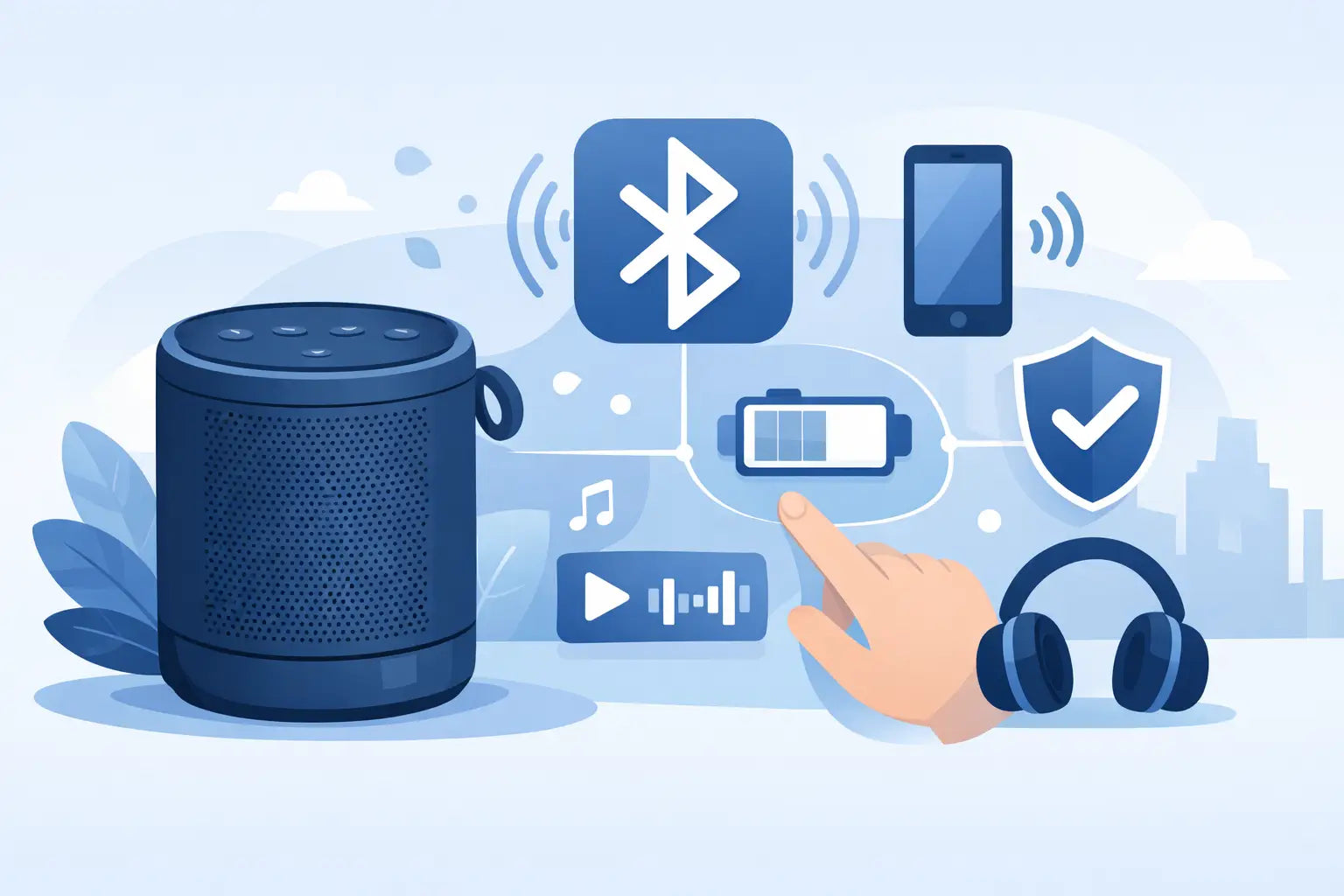
A portable Bluetooth speaker earns its place when your phone alone sounds thin and wired kit is not practical. It can handle a kitchen playlist, a park meet-up, a workbench podcast or a weekend away without taking over your bag. The best choice is not automatically the loudest or the cheapest. It is the model that suits where you will use it, how you listen and how often you want to carry it.
For most buyers, the useful starting point is simple: decide whether portability, sound quality, battery life or outdoor protection matters most. You can get a speaker that does all four reasonably well, but the price and size usually rise as you ask for more.
Choose a Portable Bluetooth Speaker by Use Case
A compact speaker for your desk or bedroom has different priorities from one intended for the garden. Small models are easy to move, often cost less and can deliver clear sound at close range. Their limitation is physical: a smaller enclosure has less room for bass and will not fill a large outdoor space as comfortably as a bigger unit.
For commuting, holidays and day trips, look for a speaker that can slip into a backpack side pocket or clip to a bag. Weight matters more than many specifications suggest. A 200g speaker is easy to bring everywhere; a 1kg model may sound fuller, but it can quickly become something you leave at home.
Garden and social use call for more volume, stronger bass and useful weather protection. If you expect background music while people are talking, a slightly larger speaker is usually the better buy. Very small speakers can sound good at low volume, but may become harsh or lose bass when pushed hard.
If the speaker will mainly sit in one room, portability may be less valuable than stereo pairing, mains charging or a larger driver setup. Do not pay extra for a clip, extreme waterproofing or all-day battery capacity if it will never leave the shelf.
Sound: Size Still Sets the Limits
Bluetooth versions and codec support get attention, but speaker size, driver design and tuning have the biggest effect on what you hear. A well-made compact speaker can provide clear vocals and a lively sound for podcasts, acoustic tracks and casual listening. For electronic music, hip-hop and rock, larger models generally give drums and bass more weight.
Check how a speaker is described at ordinary listening levels, not only its maximum output. Manufacturers may quote high wattage figures, but these do not always make one speaker directly comparable with another. A lower-rated model with sensible tuning can sound cleaner than a louder alternative at the volume you actually use.
Bass is another area where expectations need managing. A small portable speaker can produce the impression of bass, especially indoors near a wall or on a table. It cannot move the same amount of air as a larger speaker. If deep low-end is essential, choose a larger format rather than relying on marketing terms such as “extra bass”.
Stereo pairing can be worthwhile if you listen at home. Two compatible speakers placed apart give music more width and can improve the experience more noticeably than a small jump in power from one speaker to another. The trade-off is buying, charging and carrying two units instead of one.
Battery Life Is More Than the Headline Figure
Quoted battery life is normally measured at modest volume. Turn the volume up, use extra bass modes or charge your phone from the speaker, and real-world runtime drops. That does not mean the manufacturer is being misleading; it means battery tests are carried out under controlled conditions.
For regular use, around 10 to 15 hours is enough for several listening sessions before charging. A model rated for 20 hours or more is useful for camping, festivals, long weekends and households where the charging cable tends to disappear. USB-C charging is particularly convenient because many phones, tablets and accessories already use it.
Some speakers work as a power bank, letting you charge a phone from their battery. This is handy in a pinch, but it will reduce playback time, so treat it as a backup rather than a replacement for a proper power bank. Also check whether the speaker can play while charging if that matters for desk or kitchen use.
Waterproof Ratings Explained Without the Guesswork
Water resistance is one of the most useful features on a portable speaker, but the rating should match the risk. An IPX4-rated model is generally suitable for splashes, making it a sensible choice for the kitchen or a light shower nearby. It is not designed to be submerged.
IP67 is a stronger all-round rating for outdoor use. The first number refers to dust protection, while the second refers to water protection. A speaker with IP67 protection is typically sealed against dust and can handle temporary immersion in water under test conditions. That makes it more reassuring around the beach, pool or muddy campsite, although you should still dry the charging port before plugging it in.
Waterproof does not mean indestructible. Sand can affect buttons and grilles, saltwater should be rinsed off with fresh water where the manufacturer advises it, and a heavy drop can damage a speaker regardless of its IP rating. A protective finish and a solid build are just as useful as a headline waterproof claim.
Features That Are Actually Worth Checking
Bluetooth range is normally ample for everyday use, but walls, bodies and busy wireless areas can reduce it. If you plan to leave your phone indoors while using the speaker in the garden, a stable connection matters more than a theoretical maximum range.
A built-in microphone can turn a speaker into a hands-free calling device. It is convenient for quick calls, but do not expect it to replace a headset in a noisy room. Similarly, voice assistant support can be helpful if you already use it, yet it should not outweigh sound, battery and build quality.
Physical controls are often better than relying on your phone. Raised buttons make it easier to skip a track, adjust volume or pause music when your hands are wet, cold or covered in barbecue prep. An app with an equaliser can be useful too, especially if you prefer more vocal clarity or less bass, but it should be an added benefit rather than the only way to make the speaker sound right.
If you still use older devices, an AUX input may be relevant. Many newer portable models focus entirely on wireless playback, which keeps the design simple but removes the option of connecting a laptop, MP3 player or games console controller with a cable. Check the ports before buying rather than assuming one will be included.
New, Refurbished or Clearance: Buying for Value
Recognised brands often offer better long-term value because their speakers tend to have more consistent sound tuning, clearer specifications and available support. That does not mean you need to pay full recommended retail price. Refurbished, end-of-line and sale stock can make a higher-spec speaker more affordable than a new entry-level alternative.
When comparing refurbished products, focus on condition, included accessories, battery expectations and warranty cover. A properly checked refurbished speaker can be a sensible option for a kitchen, student flat, travel bag or first portable audio upgrade. It is also a practical way to keep good electronics in use for longer.
At FatBat, clear product naming makes it easier to compare model, colour, connectivity and key features before adding to cart. Free UK delivery and warranty cover of up to 12 months can also make a branded refurbished or sale model a more confident purchase than an unknown-budget alternative with little after-sales support.
A Quick Way to Narrow Down the Choice
Start with the place you will use the speaker most. For a bedroom, desk or short commute, prioritise compact size, USB-C charging and clear sound. For a garden or holiday, move up to a tougher model with stronger battery life and at least meaningful splash protection. For regular outdoor gatherings, choose the larger speaker first, then compare waterproof rating and battery capacity within your budget.
Finally, think about the music you play rather than the feature list you might use once. A portable Bluetooth speaker should be easy to pick up, quick to connect and enjoyable at your usual volume. Get those basics right and it will be the bit of tech that comes with you far more often than you expected.