



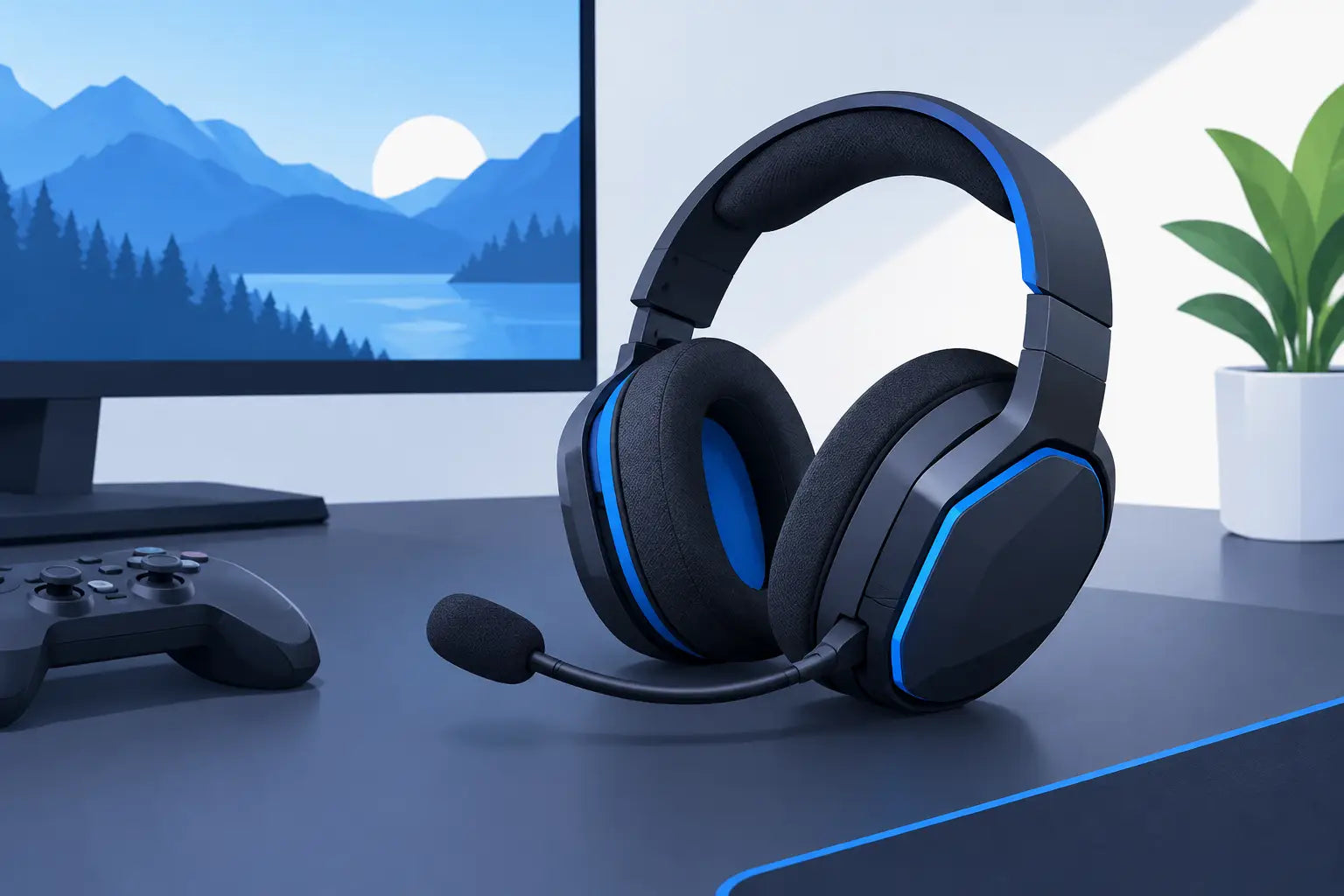
A gaming headset can make a brilliant game feel flat, or turn a tense final round into something properly immersive. Yet the loudest spec on the box is rarely the one that matters most. The right gaming headset needs to fit your platform, your games and the number of hours you actually play.
That means looking beyond flashy RGB and giant driver numbers. Sound positioning, microphone clarity, clamp pressure and connection type will affect every session. Buy well and you will hear more, communicate better and avoid replacing an uncomfortable headset six months later.
Start with how and where you play
Before comparing brands, decide what the headset has to do. Competitive shooters put positional audio and microphone quality near the top of the list. In single-player games, a wide soundstage, convincing bass and rich detail can matter more. If you move between gaming, music, calls and streaming, a more balanced sound profile is usually the smarter choice.
Your platform is equally important. A 3.5 mm wired headset is the simplest route for many consoles, controllers and PCs, although its features may depend on the device it is connected to. USB models can offer virtual surround processing or custom EQ controls, but console support varies. Wireless headsets with a dedicated USB dongle generally deliver low-latency audio, while standard Bluetooth can introduce noticeable delay unless the device and headset support a suitable low-latency setup.
Do not assume wireless means universal. Check that a headset explicitly supports your PlayStation, Xbox, Switch, PC or mobile device before you commit. Xbox wireless compatibility, in particular, is not a given just because a headset works wirelessly elsewhere.
What makes a gaming headset worth wearing
Comfort is a performance feature
A headset that sounds exceptional for 20 minutes is not necessarily a good headset. Weight, headband padding, earcup depth and clamping force become very obvious during a long evening online. Larger ears may need spacious over-ear cups; glasses wearers should look for softer cushions that do not create painful pressure points.
Leather-effect pads can feel plush and help isolate outside noise, but they may run warm. Breathable fabric pads are cooler for extended use, though they can let in more sound. Neither is automatically better. It depends on whether you play in a quiet room, a busy shared flat or a warm gaming space where comfort quickly beats isolation.
Adjustability matters too. A well-built headband should sit securely without forcing the earcups upwards, and controls should be easy to find without taking your eyes off the screen. A physical volume wheel is often more useful in the moment than another software setting.
Sound should suit the game, not the marketing
Most gaming headsets use 40 mm or 50 mm drivers. That figure alone tells you very little about how they sound. Tuning, enclosure design, ear pads and software have a far greater effect. A boosted bass response can make explosions feel big, but too much low end can mask footsteps, reloads and quieter environmental cues.
For competitive play, look for clear mids and controlled bass. You want direction, separation and detail, not a wall of noise. For story-led games, racing titles and music, a fuller and more natural presentation may be more enjoyable. If you mainly play a mix of everything, avoid extremes. A headset with sensible tuning and EQ controls gives you room to adjust without trying to fix a poor foundation.
Virtual surround sound can help some players place effects around them, especially in games designed with spatial audio in mind. Others prefer straightforward stereo because it sounds more precise and less processed. Treat surround modes as a useful option, not a reason to buy on their own.
Your microphone needs to be heard, not just included
A decent microphone separates a proper team headset from a pair of headphones with a boom attached as an afterthought. Voice should sound clear enough for your squad to understand quickly, even with keyboard clicks, fans or household noise nearby.
A flexible boom lets you position the mic near your mouth without placing it directly in front of your breath. Detachable mics are useful if you want a headset that can also travel or handle music duties. Flip-to-mute designs are brilliantly practical, provided the hinge is solid and the mute status is obvious.
Noise reduction can tidy up background sound, but aggressive processing may make voices thin or artificial. If you use Discord, stream or join regular work calls, check recorded mic tests rather than relying on product descriptions alone.
Wired or wireless: choose the compromise you prefer
Wired headsets remain hard to beat for simple, reliable gaming. There is no battery to charge, no signal to manage and usually less to spend for comparable sound quality. A cable can be annoying if you play from the sofa or move around while chatting, but it is a trade-off many players happily make.
Wireless models bring freedom and a cleaner desk, especially for PC and PlayStation gaming. The compromise is battery life, charging habits and potentially higher cost. Battery claims are useful only if they suit your pattern of use. A headset rated for a full weekend may still be inconvenient if it needs a lengthy recharge and you forget to plug it in after a session.
Prioritise a dedicated 2.4 GHz wireless connection for gaming where possible. It is designed for responsive audio and tends to be more reliable than Bluetooth alone. Bluetooth is still valuable for phone calls and music, and dual wireless models can be very convenient, but do not pay extra for features you will never use.
Software can improve a good headset, not rescue a bad one
Brands such as SteelSeries, Logitech and Razer offer software that can control EQ, microphone settings, surround modes and lighting. That is useful when you play on PC and enjoy tuning your setup. It is less relevant if you play entirely on console, where access to these settings can be limited or absent.
A few minutes with an EQ can make a real difference. Reducing excessive bass may reveal game detail, while a small lift in the vocal range can improve chat clarity. Save separate profiles if your software allows it, but keep the changes sensible. Extreme EQ settings often create distortion or fatigue rather than better sound.
Build quality deserves the same scrutiny. Metal reinforcements, replaceable ear pads and a detachable cable can extend the useful life of a headset far more than an extra lighting zone. These are products built to be worn, adjusted, packed away and occasionally knocked off a desk. Practical design wins.
Why refurbished gaming headsets make sense
Premium gaming audio does not become irrelevant because its first owner moved on. A professionally refurbished or open-box gaming headset can put better materials, stronger sound and established features within reach for less than the original retail price.
The key word is professional. Refurbished condition should be clearly described, with transparent grading and relevant warranty coverage. A headset in excellent cosmetic condition may suit someone who wants it to look fresh on a desk; a more visibly used grade can be a smart choice if performance and price are the priority. Neither is a lesser decision when the condition is stated honestly.
Pay attention to hygiene-sensitive parts, too. Ear pads, headbands and microphones should be assessed as part of the refurbishment process, and product listings should make the condition clear. Buying from a specialist such as FatBat means choosing technology that has been checked, graded and presented properly, rather than gambling on an unknown history.
There is also a straightforward environmental gain. Keeping quality electronics in use for longer reduces unnecessary waste and makes better use of the energy and materials already invested in making them. Smart value and a longer product life can sit comfortably together.
Make the final decision with the boring details
Before checkout, confirm platform compatibility, connection type, microphone design, battery expectations and return terms. Then think about the ordinary moments: Is the cable long enough for your setup? Can you replace the ear pads? Will the controls make sense in the dark? Does the headset fold or travel well if you take it between home, uni and work?
The best gaming headset is not the one with the biggest claims. It is the one you barely notice on your head, hear clearly through and still enjoy using long after the new-product excitement has gone. Choose the features you will use, the quality you can trust and the price that leaves room for the games.